The Q Continuum: Q Species, Cosmic Power, and Picard's Trial of Humanity
Browse the full topic archive for more internal links in this category.
Overview
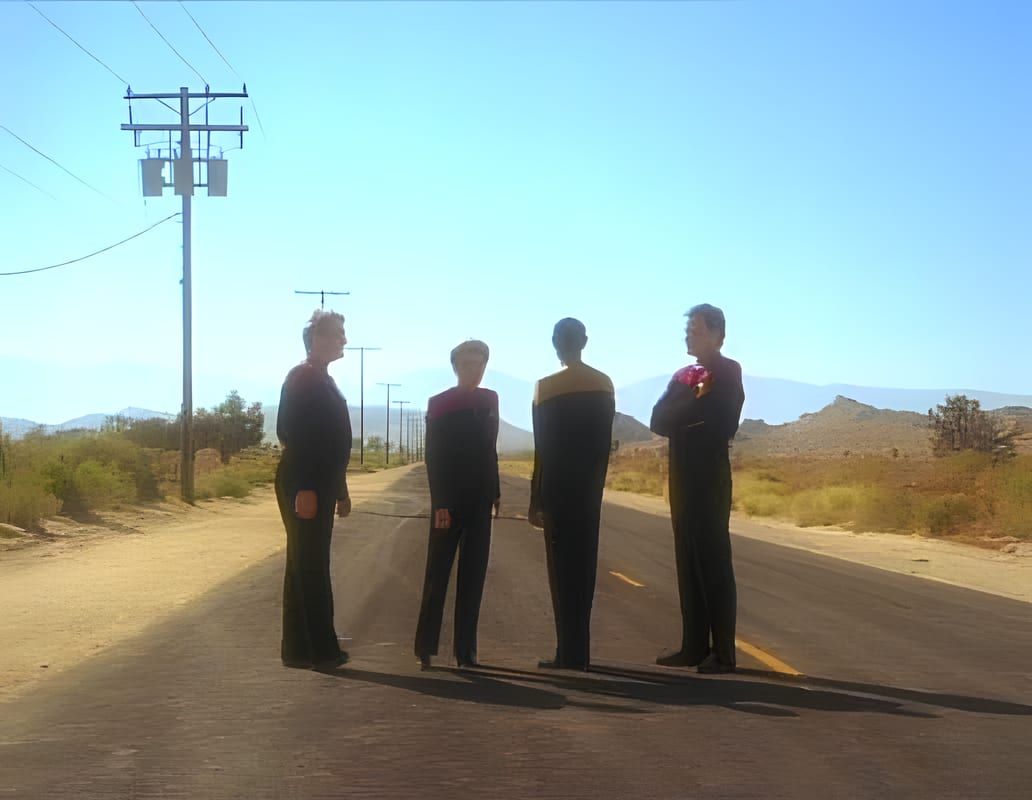
The Q were near-omnipotent, near-immortal non-corporeal entities associated with the Q Continuum, a domain or condition beyond ordinary Federation categories of territory, statehood, and species biology. Their power over matter, time, perception, and causality made standard Starfleet first-contact assumptions inadequate.
For Picard's record, the Continuum matters because it supplied both the authority and the audience for Q's repeated trials of humanity. The encounters aboard the USS Enterprise-D were not isolated pranks; they reflected a broader Q culture fascinated by, threatened by, and often bored with lesser civilizations.
Nature of the Q

Q history is difficult to state in linear terms. Some accounts describe the Q as once closer to humanoid life, while others present them as beings whose existence does not fit ordinary origin language. Their capabilities included travel across time and space, transformation of individuals, manipulation of planetary conditions, and interference with starships and civilizations.
Despite claims of omnipotence and immortality, the Q were not without limits. They could punish or depower one another, imprison dissidents, experience civil conflict, and, in Q's own late-life account, face death. Those limits make the Continuum less a divine absolute than a society with immense capacity and unresolved internal law.
Role in Picard's Career
Picard's first mission as captain of the Enterprise-D placed him before Q as a representative of humanity. That trial framed much of Picard's later command career: the question was not whether humanity had power, but whether it had discipline enough to use power without reverting to violence.
Q later exposed Picard to the Borg, revisited his personal history, and forced him through temporal and psychological tests. Each event translated Continuum-level capability into a specific inquiry about Picard's judgment, fear, curiosity, or capacity for self-forgiveness.
Key Events or Actions
Formal Starfleet awareness of Q followed his 2364 encounter with the Enterprise-D at Farpoint. By the later 2360s and early 2370s, command-level officers were briefed on Q encounters because his interventions could affect ships, crews, and strategic outcomes without warning.
The Q species showed internal instability despite their power. Quinn's request for asylum aboard Voyager and the later Q Civil War revealed a society exhausted by timelessness, divided over stagnation, and capable of inflicting collateral damage at cosmic scale.
Q's personal return to Picard in 2401 shifted the Continuum's judgment language into a private reckoning. His concern was no longer only humanity's trial, but Picard's ability to live beyond guilt.
Strategic or Historical Significance
The Continuum's significance for Starfleet is not military in a conventional sense. A species able to alter conditions at will cannot be deterred by fleet strength. Starfleet's only durable response was interpretive: understand motive, preserve ethical clarity, and avoid assuming that power implies wisdom.
Starfleet operations involving the Q also clarified the danger of cosmic boredom. Q interference often emerged from curiosity, irritation, punishment, or experiment rather than political necessity. That made the Q unpredictable in ways different from empires, collectives, or military states.
Legacy
The Q Continuum remains one of the strongest philosophical pressures on Picard's archive. Its encounters ask whether moral development can be measured, whether a civilization can be tried like a defendant, and whether judgment without accountability is itself corrupting.
Picard's responses did not defeat the Q. They instead established a record of resistance through argument, restraint, and refusal to let spectacle define the question. That is why the Continuum belongs in this archive as a philosophical subject as much as an adversarial one.