Hugh: Borg Individuality and Picard's Refusal of Vengeance
Browse the full topic archive for more internal links in this category.
Overview
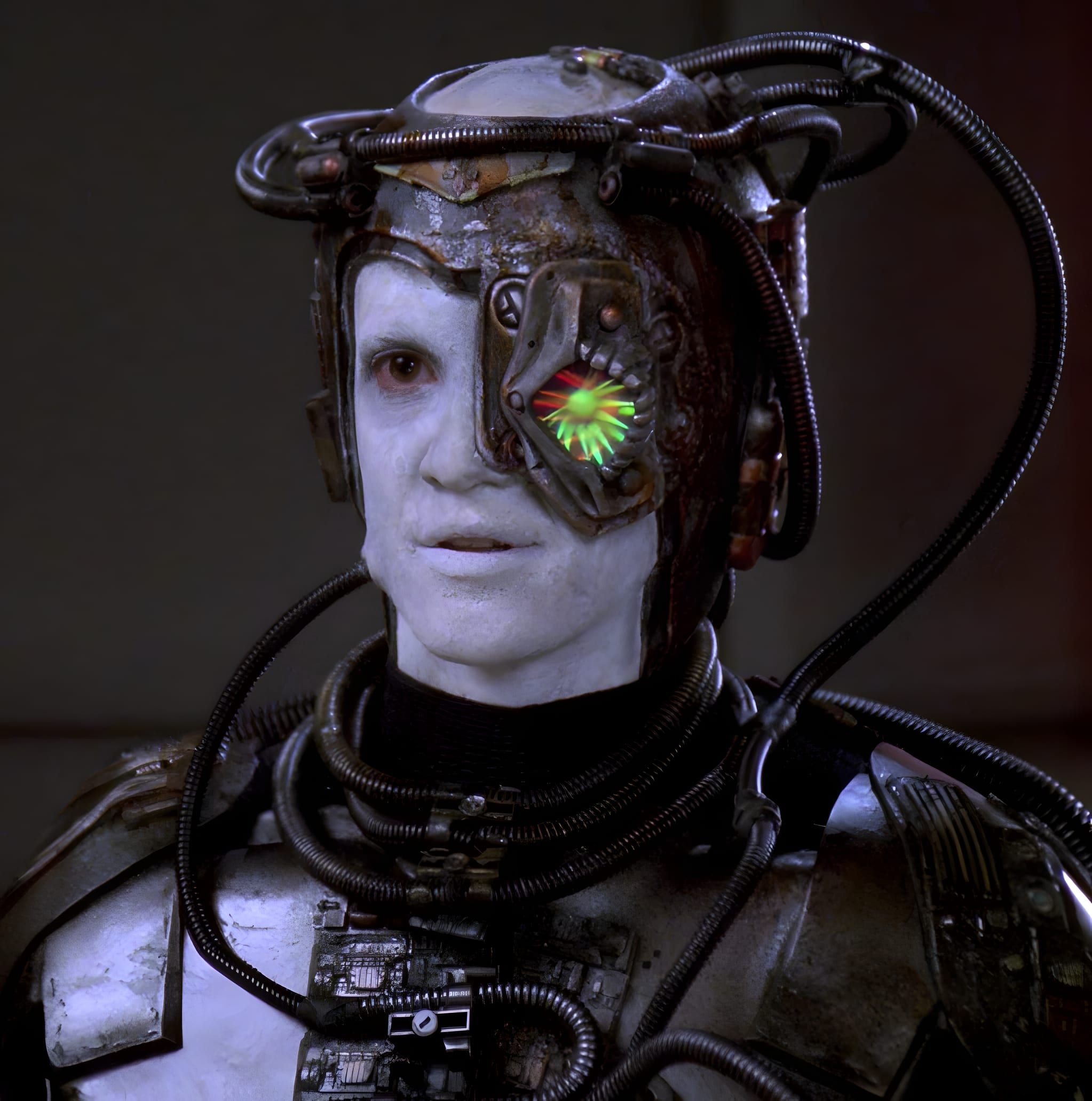
Hugh, formerly Third of Five, was a Borg drone recovered from a scout-ship crash in the Argolis Cluster in 2368. Brought aboard the USS Enterprise-D for medical treatment, he became one of the first Borg individuals Picard's crew encountered outside the full control of the Collective.
His case transformed the Borg from an enemy mass into a moral problem involving personhood. Hugh's emergence from the Collective forced Picard to weigh vengeance, grief after Battle of Wolf 359, and the possibility that a drone could become a subject rather than a weapon.
Role in Picard's Career
Picard initially saw Hugh as an opportunity to destroy the Borg through an implanted program that would spread through the Collective. The plan drew on the same network vulnerability Data had exploited after Picard's assimilation as Locutus of Borg.
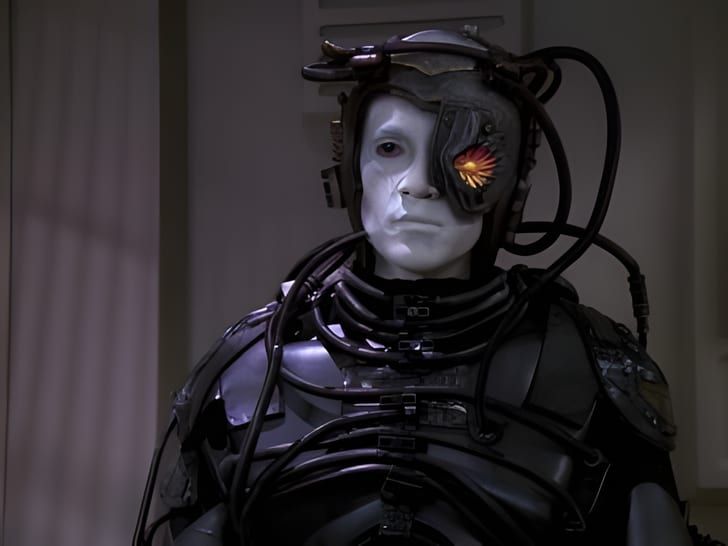
The decision not to send Hugh back as a genocidal vector became one of Picard's clearest reversals from trauma toward law. Hugh's use of singular identity, his loyalty to Geordi La Forge, and his refusal to assist assimilation made it impossible for Picard to treat him as merely a delivery mechanism.
Key Events or Actions
Hugh was nursed back to health by Beverly Crusher while Geordi La Forge found ways to sustain him without a Borg regeneration alcove. La Forge also gave him his name through a shift from you to Hugh, turning grammar into individuality.
Guinan, whose people had suffered from the Borg, first resisted contact with Hugh but later helped him understand that resistance was not futile. Picard then confronted Hugh in the voice and posture of Locutus, testing whether the drone's individuality could withstand Collective authority.
Hugh chose to return to the crash site so the Collective would not endanger the Enterprise while searching for him. His individuality later spread through his cube, destabilizing its shared identity and causing the Collective to abandon it.
In 2370, Lore exploited the disconnected Borg and promised to remake them in his image. Hugh rejected Lore's rule, led a resistant group of drones underground, and helped the Enterprise-D crew rescue Picard, Troi, and La Forge while restoring Data from Lore's influence.
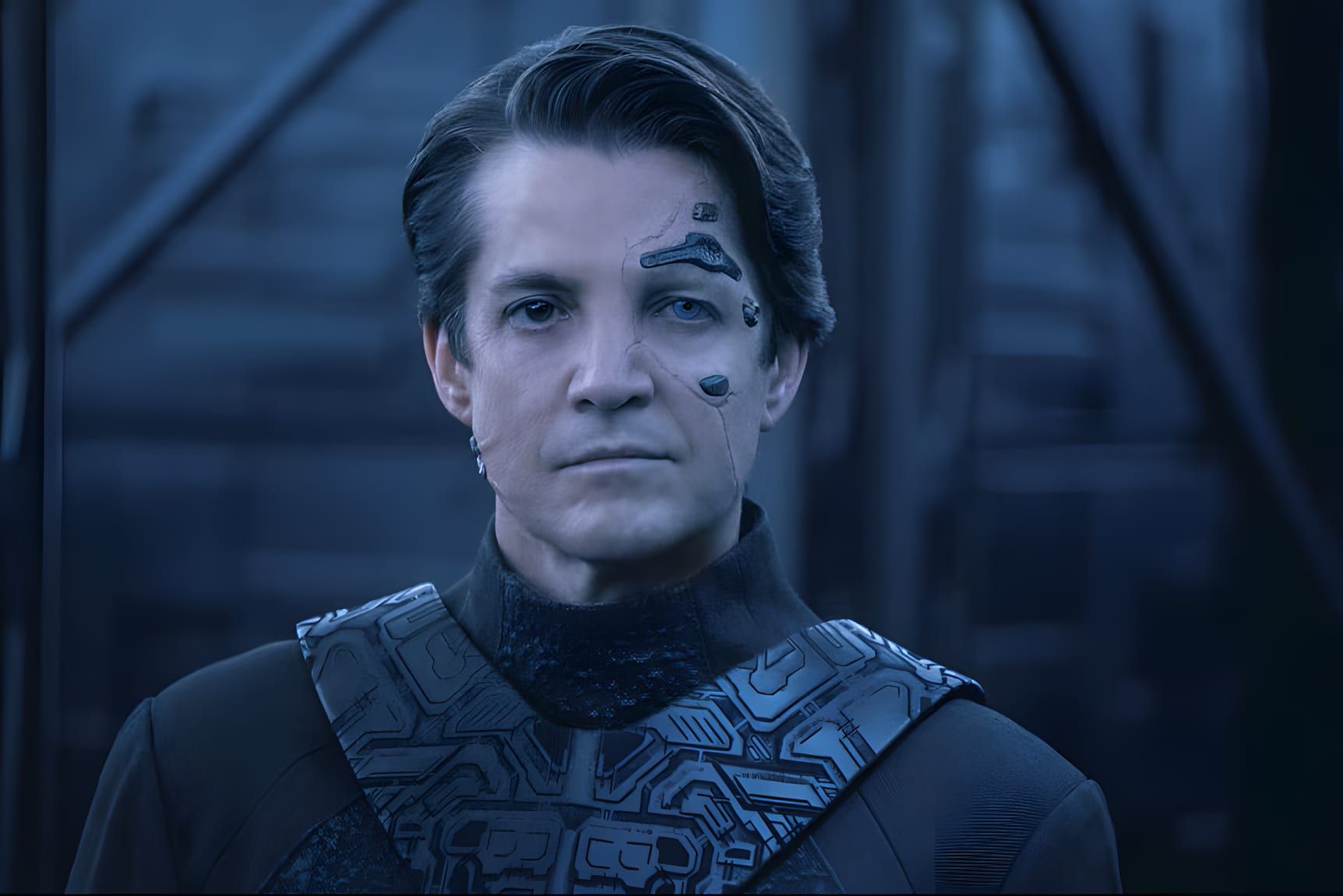
By 2399, Hugh was an xB and executive director of the Borg Reclamation Project aboard the Artifact. He helped former drones recover lives after implant removal, aided Picard and Soji Asha, and used the cube's spatial trajector to send them to Nepenthe before Narissa killed him.
Relationship to Picard
Hugh and Picard's relationship began under the shadow of Locutus. Hugh recognized Picard's assimilated identity immediately, while Picard had to confront the fact that the face of the Borg could now look back at him with fear, loyalty, and self-reference.
Their 2399 reunion on the Artifact recast the relationship in shared former-Borg terms. Hugh believed Picard, as an xB in his own history, could advocate for those the galaxy treated as property, contaminants, or salvage.
Strategic or Historical Significance
Hugh's case exposed the Federation's hardest Borg question: whether moral law applies when the enemy appears collective, invasive, and existential. The refusal to weaponize him did not make the Borg less dangerous, but it prevented Starfleet from answering assimilation with extermination.
His later work on the Artifact extended that question beyond battlefield ethics. Former drones needed medicine, identity, protection, and political recognition. Hugh's life showed that liberation from the Collective was not a single event but a continuing social obligation.
Legacy
Hugh's legacy begins with a pronoun and ends with a reclamation project. He proved that individuality could survive where the Collective insisted it could not, and that the recovery of personhood required witnesses willing to see more than machinery.
For Picard's archive, Hugh is the bridge between Locutus trauma and later xB politics. He made Picard's refusal of vengeance operational, then spent his own life protecting others who were trying to become someone after being Borg.