First Contact 2063: Cochrane, the Vulcans, and Picard's Timeline Defense
Browse the full topic archive for more internal links in this category.
Overview
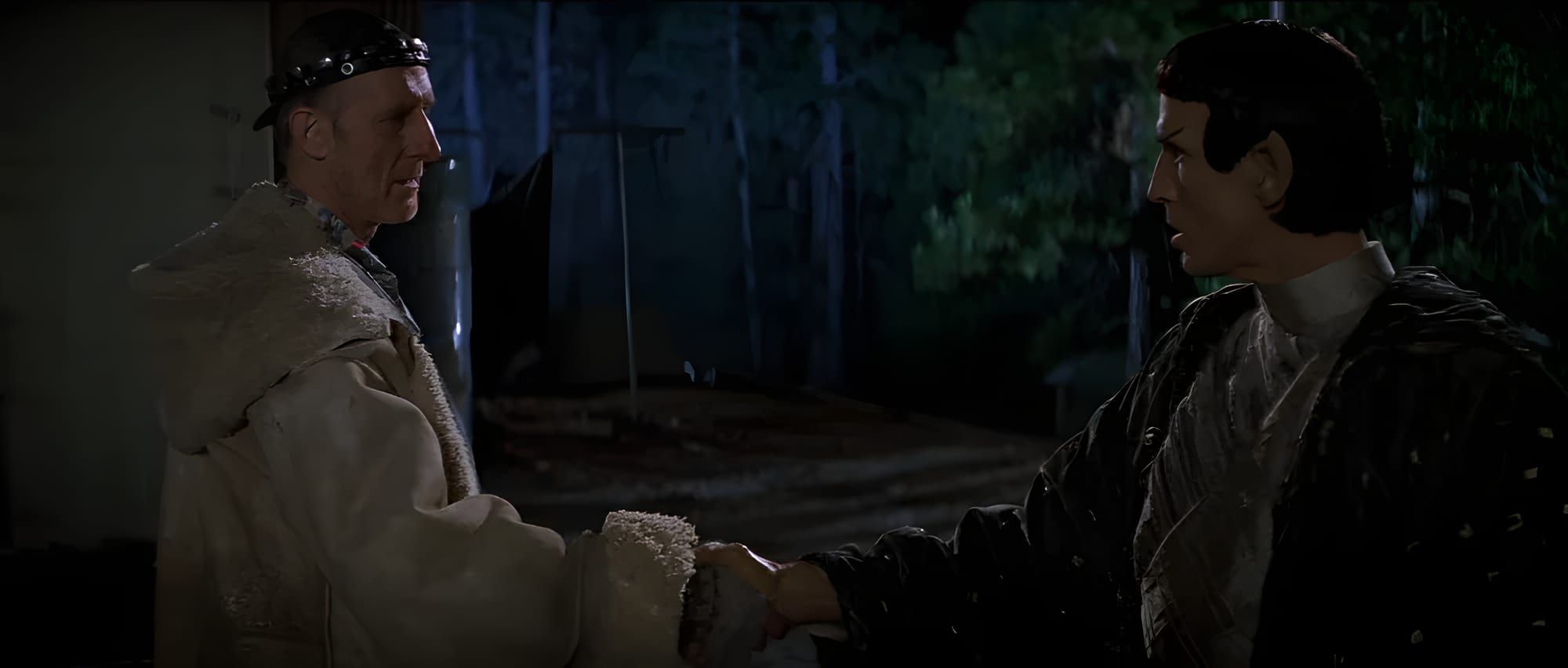
First Contact refers, in Human historical usage, to the public meeting between Humans and Vulcans on April 5, 2063. The event followed Zefram Cochrane's warp flight aboard the Phoenix and became a foundation point for Earth's later unification and the eventual United Federation of Planets.
Picard's connection to the event came through the Borg temporal incursion of 2373. His command of the USS Enterprise-E placed him in the unusual position of defending a past he knew as history but had to preserve as an active mission.
Role in Picard's Career
The mission forced Picard to revisit the Borg not as memory but as immediate threat. After Battle of Wolf 359, his judgment around the Collective carried personal anger, and the Enterprise-E crisis tested whether that anger would compromise command.
Picard's eventual decision to abandon vengeance and complete the timeline defense is central to the event's place in his career. The survival of First Contact required more than stopping the Borg; it required Picard to regain command of himself.
Key Events or Actions
The historical First Contact occurred when the Vulcan survey ship T'Plana-Hath detected the Phoenix's warp signature and landed near Bozeman, Montana. Cochrane's successful flight demonstrated that humanity had crossed the threshold for interstellar recognition.

In 2373, the Borg attempted to alter that moment by traveling into the past and preventing the flight. Enterprise-E personnel assisted Cochrane's launch preparations while Picard and his crew fought Borg assimilation aboard the ship.
The timeline was preserved when the Phoenix launched, the Vulcans arrived, and the Borg attempt failed. The event remained both a civic origin story and a record of how fragile that origin became under temporal attack.
Strategic or Historical Significance
First Contact 2063 is strategically significant because it marks the shift from isolated postwar Earth to an interstellar future. It provided the symbolic and diplomatic foundation for later Starfleet and Federation institutions.
Starfleet operations involving First Contact show why temporal security is not abstract. A single disrupted launch would have changed humanity's political development and the Federation's existence.
Legacy
First Contact Day became an annual commemoration and later a date with painful echoes, including the Attack on Mars. The same holiday could mark both humanity's opening to the stars and Starfleet's later institutional failure.
For Picard, the preserved timeline reinforced a recurring theme: history survives through specific choices made under pressure, not through inevitability.