Q: Picard's Trial, the Continuum, and the Limits of Judgment
Browse the full topic archive for more internal links in this category.
Overview
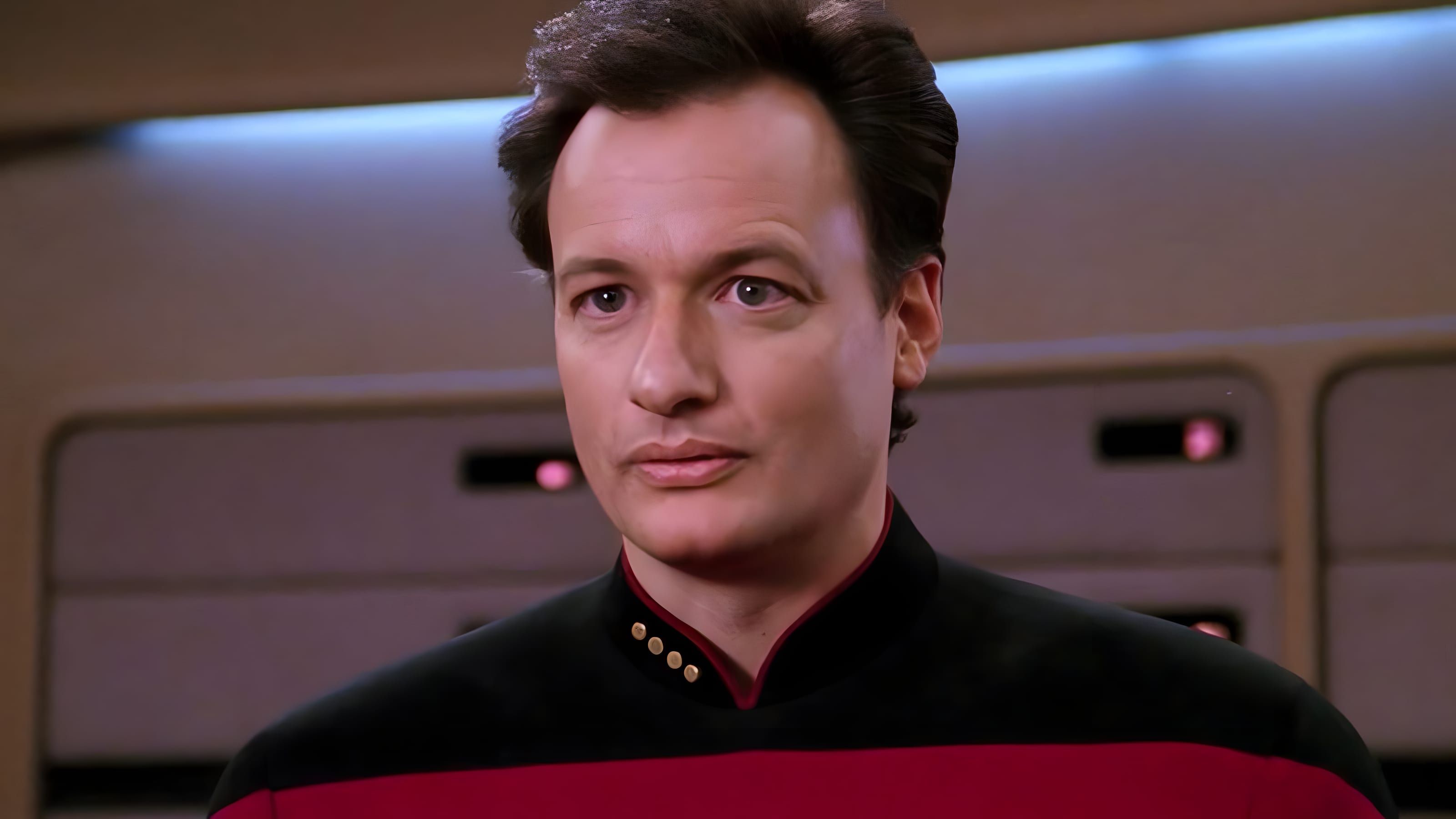
Q was an individual member of the Q Continuum, a species whose command of matter, time, and perception placed ordinary diplomatic categories under strain. In Picard's record, Q appears less as a conventional enemy than as a hostile examiner: capable of coercion, but usually more interested in forcing a decision than in holding territory.
Starfleet operations involving Q repeatedly collapsed the distance between mission, courtroom, and experiment. His interventions aboard the USS Enterprise-D, in alternate historical settings, and later around the USS Stargazer crisis made Picard a representative case for humanity's maturity.
Relationship to Picard
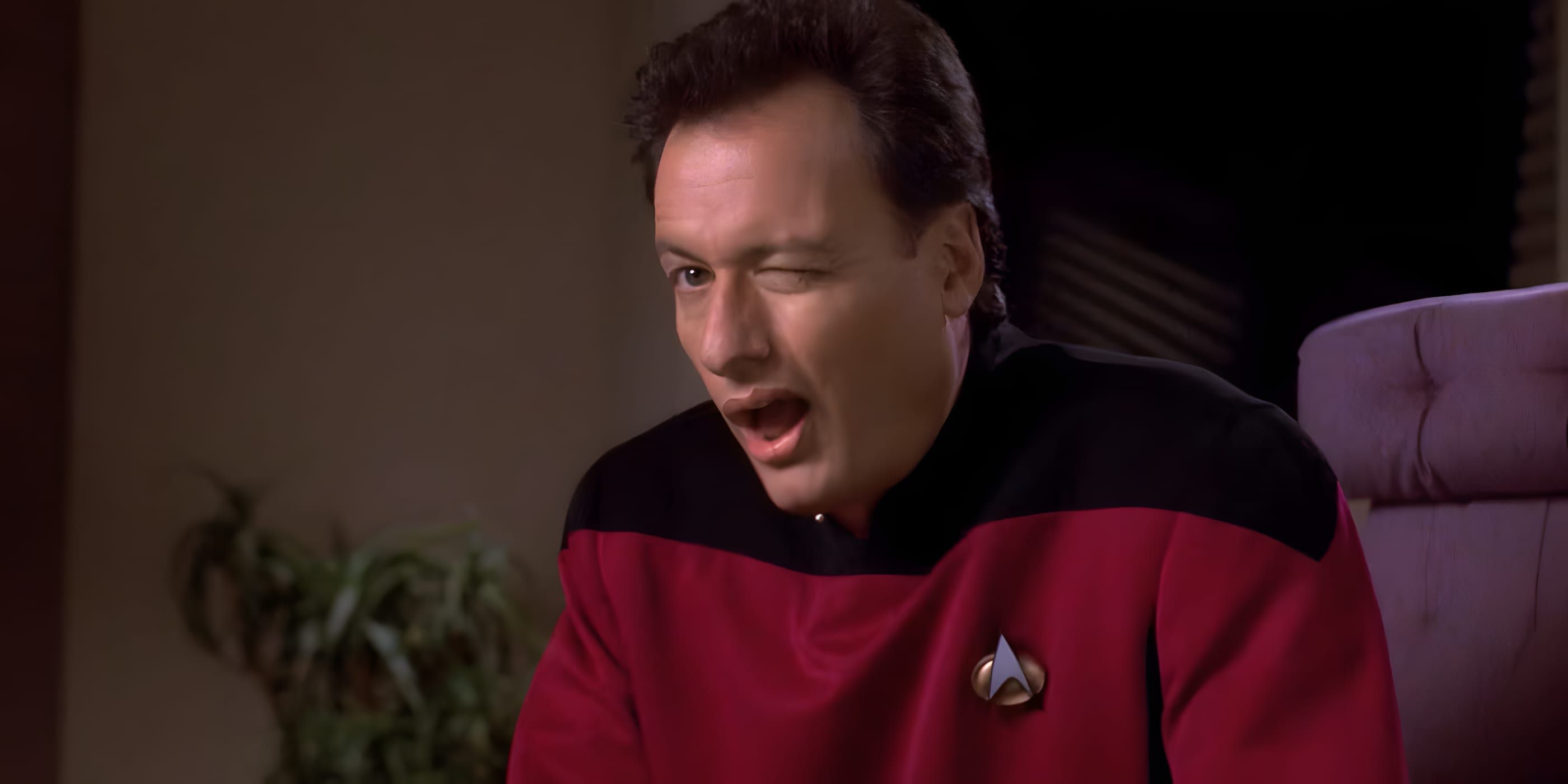
Q's first known encounter with Picard placed humanity on trial during the Enterprise-D mission to Farpoint. Picard's command response established the pattern that followed: refusal to accept Q's premise, willingness to negotiate the terms of the test, and insistence that Federation conduct be judged by action rather than rhetoric.
The relationship became unusually personal. Q exposed Picard to the Borg near System J-25, revisited Picard's youth after the captain's near-fatal injury, and later used temporal manipulation to test whether Picard could release inherited guilt. Each encounter turned Picard's public authority back toward private responsibility.
Key Events or Actions
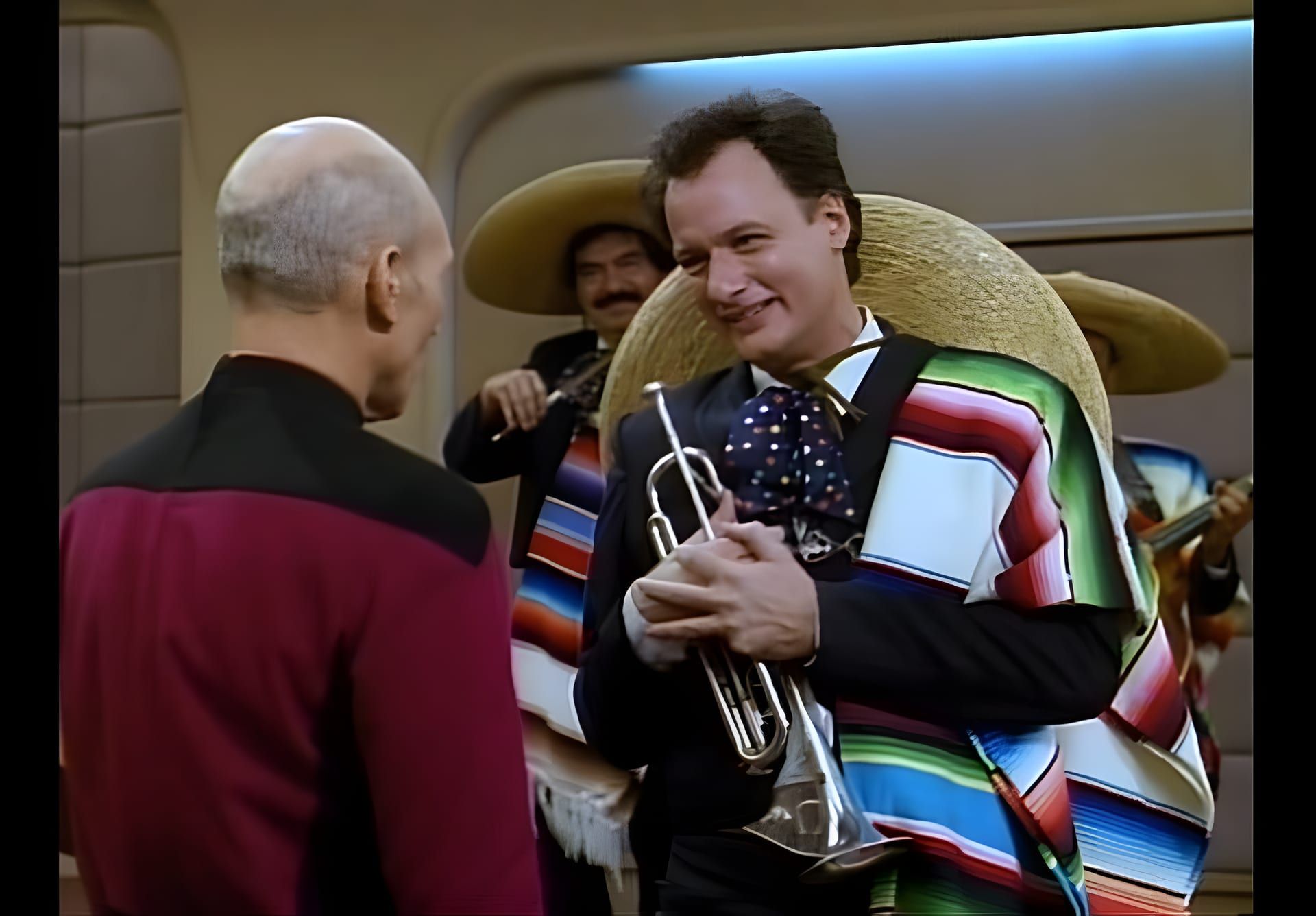
At Farpoint, Q framed Picard and his crew as defendants in a civilizational proceeding. The Enterprise-D's discovery of the exploited lifeform behind Farpoint Station provided the immediate answer: exploration joined to mercy, not conquest, remained Starfleet's stated purpose.
In 2365, Q's forced displacement of the Enterprise-D into the path of a Borg cube became one of the most consequential Starfleet operations involving Q. Whether read as warning or provocation, the encounter accelerated Federation awareness of the Collective and helped define the strategic horizon that later produced Wolf 359 and Locutus.
In 2370, Q resumed the trial through a temporal paradox in the Devron system. Picard's command of multiple time frames, and his willingness to ask his crews in each period to trust an improbable account, turned the test into an argument for imagination as a command discipline.
In 2401, Q's intervention around Picard, the Stargazer, and the altered Europa Mission shifted the framework from species judgment to personal release. By the end of that crisis, Q's interest in Picard was no longer only prosecutorial; it had become, however difficult to classify, a form of attachment.
Strategic or Historical Significance
Q's significance lies in the pressure he placed on Federation self-description. The threat was not merely that he could destroy a ship or rearrange a timeline, but that he could force Starfleet officers to defend their principles in conditions where force offered no stable answer.
For Picard's command of the Enterprise-D, Q functioned as an external audit of moral confidence. The captain's victories were therefore not tactical in the ordinary sense. They were acts of interpretation: recognizing the real problem behind spectacle, resisting humiliation as policy, and preserving judgment when the universe itself appeared adversarial.
Legacy
Q's final recorded exchange with Picard reframed decades of antagonism as a prolonged, uneven form of instruction. His later appearance to Jack Crusher suggested that the trial's institutional language could outlive Picard even when Picard's own case had closed.
In the historical record of Picard's command, Q remains indispensable because he turned Starfleet's moral vocabulary into an examination record. His legacy is not a single mission outcome but a recurring question: whether exploration without humility becomes another form of domination.