The Picard Maneuver: Maxia Zeta and Picard's Early Command Tactic
Browse the full topic archive for more internal links in this category.
Overview
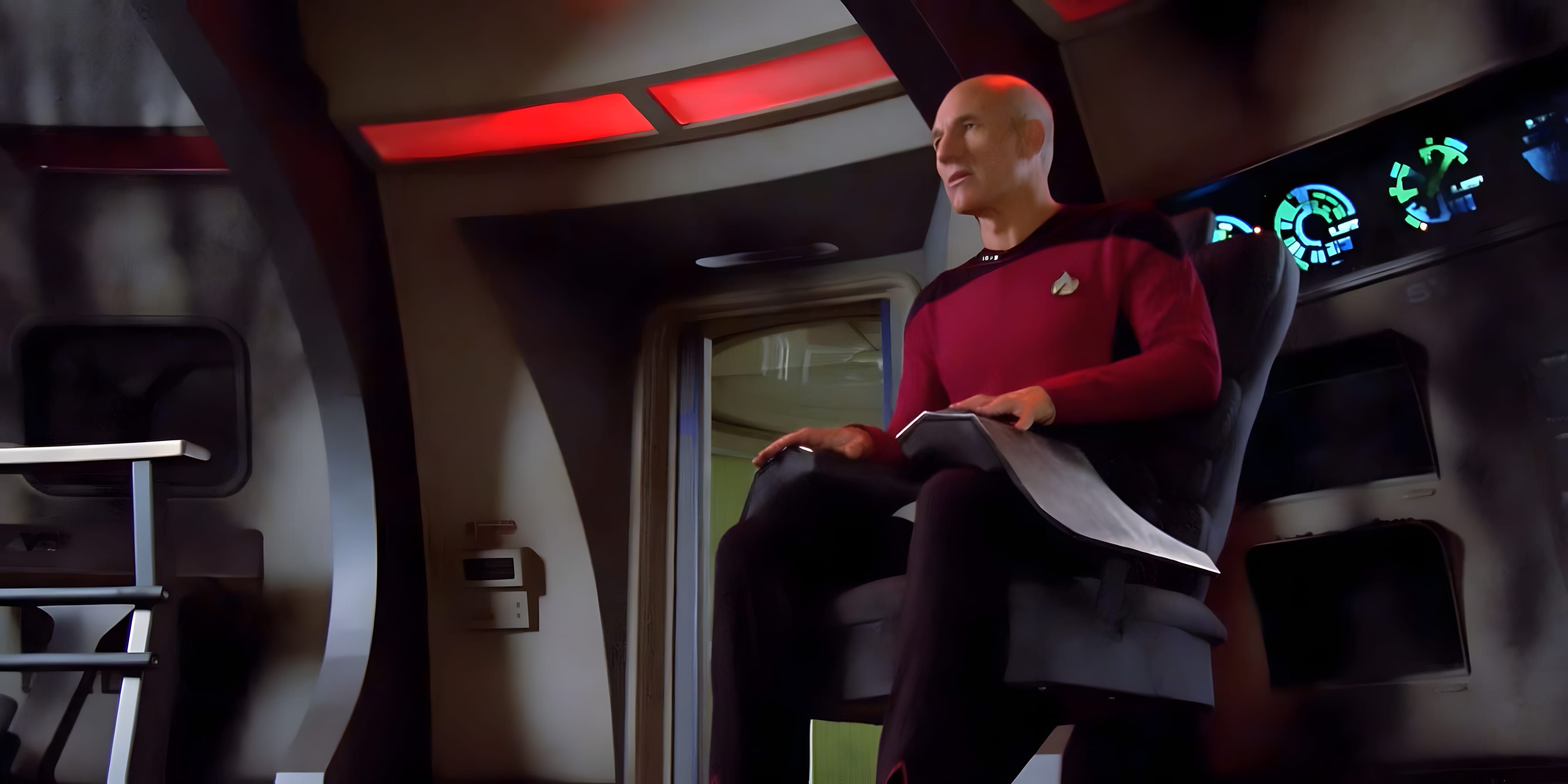
The Picard Maneuver was a starship combat tactic developed by Jean-Luc Picard during the 2355 engagement near Maxia Zeta. It used a short burst to high warp to exploit sensor lag, making the USS Stargazer appear briefly in two locations at once.
The tactic belongs to Starfleet history because it converted desperation into doctrine. Picard later described it as a survival maneuver, but Starfleet recognized its technical and command significance and awarded him the Grankite Order of Tactics.
The maneuver's name survives in two registers: the tactical definition taught in academy advanced navigation, and the informal description of Picard's habit of straightening his uniform tunic on the bridge of the USS Enterprise-D. Both refer to the same officer's precision under pressure.
The Battle of Maxia Zeta
In 2355 the USS Stargazer was operating in the Maxia Zeta system when it encountered an unknown vessel later identified as Ferengi. The attacker struck without warning, inflicting severe damage to the Stargazer's shields, weapons, and impulse systems.
Picard's ship could not win a conventional exchange. The enemy held positional advantage and expected the damaged Constellation-class cruiser to continue fighting on terms favorable to the attacker. Picard instead chose to stake survival on sensor physics.
He ordered the Stargazer to accelerate directly toward the enemy at high warp. Because sensor information from the earlier position was still arriving when the new position appeared, the Ferengi crew perceived two targets separated in space. They fired on the wrong image.
Constellation-class ships of the Stargazer era carried fewer automated targeting assists than later explorers. Picard's helmsman and tactical officers had to execute the warp burst manually, increasing the risk that mistiming would destroy the Stargazer without harming the attacker.
Ferengi accounts recovered later described the engagement from the attacker's perspective: a damaged Federation cruiser suddenly doubled on sensors, weapons fire wasted on sensor ghosts, and the enemy vessel firing from an unexpected vector before the Ferengi crew could recalculate.
The Constellation-class layout—four nacelles, heavy explorer frame—made high-warp bursts harder to execute cleanly than on later Sovereign or Galaxy designs. Picard's success therefore reflects helm discipline as much as tactical imagination.
Execution and Immediate Outcome
The Stargazer dropped from warp and fired before the enemy could correct its targeting solution. The Ferengi vessel was destroyed. Picard had preserved his crew through a maneuver that depended on timing, not superior firepower.
Victory did not save the ship. The Stargazer itself was too badly damaged to recover. Picard ordered abandonment and left the hulk adrift in the Maxia Zeta system, where it remained until Ferengi salvage interests recovered it in 2364.
Because losing a starship triggered automatic court-martial proceedings, Picard faced prosecution by Phillipa Louvois. The board examined his risk calculus and cleared him of negligence, formally recognizing both the loss and the tactical originality that had prevented greater casualties.
The survivors' ordeal did not end with the battle. Picard and his crew limped through space in shuttlecraft for weeks before rescue vessels reached them—a passage that became part of the engagement's legend and a measure of how far from support the Maxia Zeta system lay.
Starfleet's tactical write-up of the maneuver emphasized that it could not be repeated against an opponent who understood the principle. The Ferengi loss therefore purchased a one-time advantage, not a permanent doctrine.
Role in Picard's Career
Picard's command of the Stargazer was defined by the Maxia Zeta crisis. The maneuver destroyed the attacker, but the damage to the Stargazer forced abandonment and placed Picard under formal scrutiny that shaped his reputation for decades.
The incident demonstrated the cost of precise decisions under extreme pressure: victory did not prevent ship loss, trauma, or later attempts at revenge. DaiMon Bok, whose son had commanded the destroyed Ferengi vessel, spent years planning retribution.
The vessel destroyed at Maxia Zeta had been under the first command of Bok's son. Within Ferengi commercial logic the loss was doubly shameful: a ship surrendered to a damaged opponent, and a family investment erased without return. Bok converted that shame into obsession, acquiring the recovered Stargazer hulk and a pair of illegal thought-maker devices at ruinous personal expense.
When Bok falsified the Stargazer's logs and used the thought maker in 2364, Picard—his perception manipulated to relive the battle—attempted to repeat the maneuver against the USS Enterprise-D. Lieutenant Commander Data calculated a countermeasure based on gaseous compression around the true vessel position, allowing the Enterprise to stop the Stargazer with a tractor beam.
Bok's own first officer, Kazago, ended the plot by relieving his DaiMon of command for pursuing vengeance without profit—a uniquely Ferengi verdict that closed the Maxia Zeta account on commercial rather than military terms.
Louvois's prosecution and eventual exoneration became part of Picard's public record alongside the Grankite citation. Starfleet thus simultaneously honored and scrutinized the same decision—a pattern that would recur throughout his career.
The Stargazer's recovery by Ferengi scavengers in 2364 reintroduced the battle into Picard's life through Bok's revenge plot. The maneuver that had saved lives in 2355 nearly became the instrument of Picard's death when Bok induced him to repeat it against the Enterprise-D.
Strategic and Historical Significance
The maneuver illustrates the relationship between physics, sensor interpretation, and command timing. It was effective because it exploited how information arrived across light-speed delay, not because it relied on overwhelming force.
Starfleet operations involving the Picard Maneuver later treated it as a tactical study in deception under constraint. Its eventual countermeasure also shows that even a brilliant tactic becomes vulnerable once understood.
For historians of Picard's early command, Maxia Zeta marks the formation of an identity that would recur on the Enterprise-D: analytical, disciplined, and prepared to stake survival on a narrow window of understanding.
Academy instructors still use Maxia Zeta to teach sensor-delay exploitation, but they pair the lesson with Data's 2364 countermeasure. The paired case study shows innovation and counter-innovation as a continuous cycle rather than a single heroic exception.
Picard's own later command style—precise orders, minimal wasted motion, willingness to act on incomplete information—reflects habits formed during the Stargazer years and tested most publicly at Maxia Zeta.
Legacy
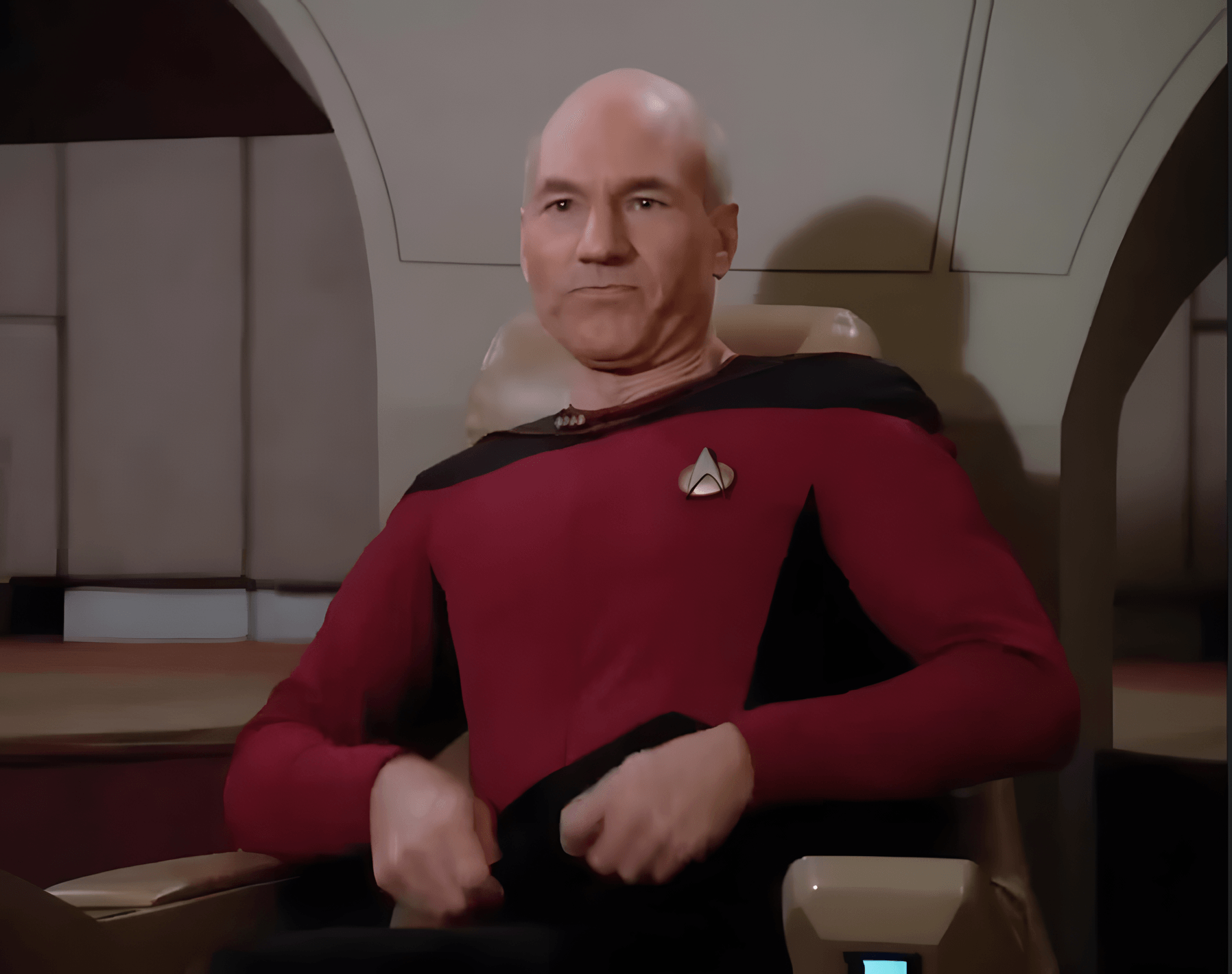
Picard received the Grankite Order of Tactics for developing the maneuver. Its name remained attached to him well beyond the Stargazer years and entered both tactical instruction and popular memory.
The USS Stargazer eventually joined the Fleet Museum at Athan Prime, restored and displayed near the rebuilt USS Enterprise-D by 2402. Picard kept a model of the ship in his quantum archive and corrected anyone who attributed the maneuver to the Enterprise rather than the Stargazer.
In historical terms, the Picard Maneuver marks the early formation of Picard's command identity and remains the tactical episode most closely tied to his first famous command.
Tactical manuals published after Maxia Zeta include a cautionary appendix: the maneuver succeeds once against unprepared sensors, but repeated use against informed opponents converts brilliance into predictability. Picard's own career illustrates both halves of that warning.
When Picard corrected Agnes Jurati that the maneuver originated aboard the Stargazer, he was defending the historical record of his first command against casual association with the Enterprise name that had overshadowed it in public memory.