Cardassian Union: State Power, Occupation, and Picard's Captivity
Browse the full topic archive for more internal links in this category.
Overview
The Cardassian Union was the governing state of the Cardassian people and one of the major powers of the Alpha Quadrant before its collapse after the Dominion War. Its institutions combined military rule, intelligence control, forced labor economics, and legal formalism.
For Picard's record, the Union is significant not only as a strategic rival during the long Federation border conflict, but as a state whose methods tested his commitment to truth under coercion.
The Union's internal structure—Central Command, the Obsidian Order, and the civilian Detapa Council—produced a government that could speak the language of law while practicing occupation, extraction, and terror as routine policy.
Cardassian legal culture prized confession and visible submission. Picard's interrogation therefore aimed not only at intelligence extraction but at producing a Federation captain who would validate Cardassian authority on recording.
Government and Power Structure
Central Command held operational authority over the military and much of civil administration. The Obsidian Order conducted intelligence operations with minimal civilian oversight. The Detapa Council provided a civilian face that was often powerless in practice.
This tripartite arrangement meant Cardassian policy could shift suddenly when military and intelligence factions competed. Gul Dukat's career illustrates how personal ambition moved within those factions across decades of border war and occupation.
Starfleet analysts treated the Union as a militarized extraction state: its economy depended on resources taken from occupied worlds, most notably Bajor, where forced labor and strip-mining were strategic rather than incidental.
The Detapa Council's nominal authority over treaties and domestic law allowed Cardassia to present itself as a constitutional state abroad while Central Command and the Obsidian Order divided real power at home. Council membership rarely shaped events until the Order's destruction in a failed strike against the Dominion removed one pillar of the tripartite balance; in the upheaval that followed, civilian leaders briefly displaced Central Command—proof that the Union's constitutional language could become real when its security organs faltered.
Obsidian Order operations frequently bypassed military chain of command. Gul Madred's interrogation of Picard reflected that culture: formal rank exercised through private cruelty with institutional backing.
Picard's Captivity Under Gul Madred
Picard's most direct encounter with Cardassian power came during his capture and interrogation by Gul Madred. The interrogation translated state discipline into a personal assault on perception, memory, and dignity.

Madred's method relied on pain, isolation, and the demand that Picard affirm visible falsehoods. The phrase associated with Picard's resistance—four lights rather than five—became shorthand for his refusal to let authority rewrite observable reality.
The captivity occurred during a period of heightened border tension and demonstrated that Cardassian justice could be deployed as theater: formal procedure masking coercive epistemology.
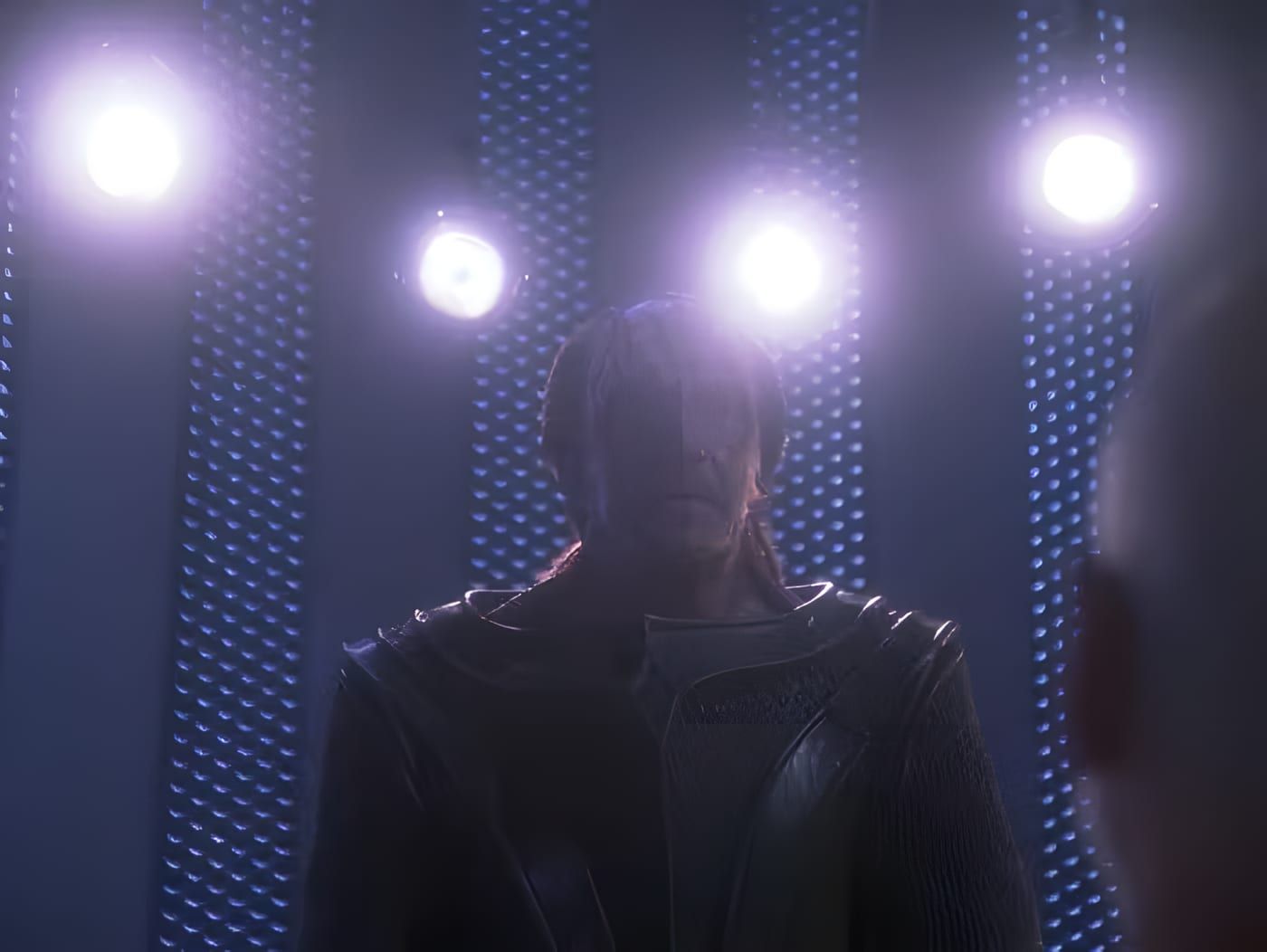
Madred's four-lights test was not improvised sadism but a method drawn from Order training: break the prisoner's epistemic confidence and the prisoner becomes an instrument of self-incrimination.
Picard's endurance relied on internalized discipline formed decades earlier at Starbase Earhart, where he learned that pain without purpose must not dictate judgment.
Border Conflict and the Long Federation Rivalry
The Federation-Cardassian border war shaped Picard's Enterprise-D service through demilitarized zones, refugee crises, and missions where Starfleet had to distinguish negotiation from moral acceptance of occupation methods.
Picard's decision to lower the USS Stargazer's shields as a truce offering in sector 21503 during the Cardassian Wars, followed by a Cardassian attack that crippled weapons and impulse systems, remained in his record as an early lesson in how the Union treated gestures of restraint.
The shooting war ended with the truce of 2367, followed by a formal peace treaty whose terms took years to settle into a stable border. Picard's first major test of the new peace came almost immediately, when Captain Benjamin Maxwell of the USS Phoenix—convinced the Cardassians were secretly rearming—launched unauthorized attacks across the line. Picard stopped Maxwell while privately warning Cardassian commanders that Starfleet had seen the evidence and would be watching. The affair defined the register of the post-truce decade: peace enforced by officers who did not trust each other.
Later USS Enterprise-D operations along the border required Picard to enforce Federation law while facing an adversary that treated law itself as a weapon.
The Federation-Cardassian treaty line created a demilitarized zone whose violations shaped Enterprise-D missions for years. Picard's reputation for strict adherence to treaty terms made him a predictable negotiator—and a target for adversaries who exploited his predictability.
Maquis activity in the DMZ complicated Picard's moral calculus: Starfleet officers sometimes sympathized with displaced colonists while still enforcing a peace written by diplomats far from the border.
Collapse and Legacy
After the Obsidian Order's destruction at the Omarion Nebula, civilian forces briefly displaced military rule. Gul Dukat's later Dominion alignment turned the Union into a subordinate power, leading to collapse by 2375.
The Union's fall exposed the fragility of states built on fear and extraction. Its institutions produced obedience but not durable legitimacy.
In Picard's archive, the Cardassian Union remains the organization most closely associated with coercive epistemology: the attempt to make a prisoner deny what he can see. Picard's resistance turned a tactical interrogation into a lasting moral record that outlived the state itself.
Cardassian membership in the Dominion briefly restored military confidence but destroyed civilian legitimacy. Worlds that had suffered under Cardassian occupation saw the Union's subordination as delayed justice rather than tragedy.
Picard's interrogation record outlived the Union itself. When Cardassian governments changed, Federation archives still held Madred's methods as evidence of what the state had been at its worst.
After the Dominion War, Cardassian survivors rebuilt under radically different institutions. Picard's four-lights answer remained in Federation ethics curricula as the standard response to coercive epistemology long after Central Command's collapse.
The Union's occupation of Bajor is the context that makes Picard's captivity legible: a state accustomed to breaking populations tested whether a single Starfleet officer could be broken the same way.
In the decades after the war, a reduced Cardassian government entered the relief politics it had once scorned, even contributing vessels to humanitarian operations in the era of the Romulan evacuation—an irony that Picard's generation of border officers noted without comment.